




























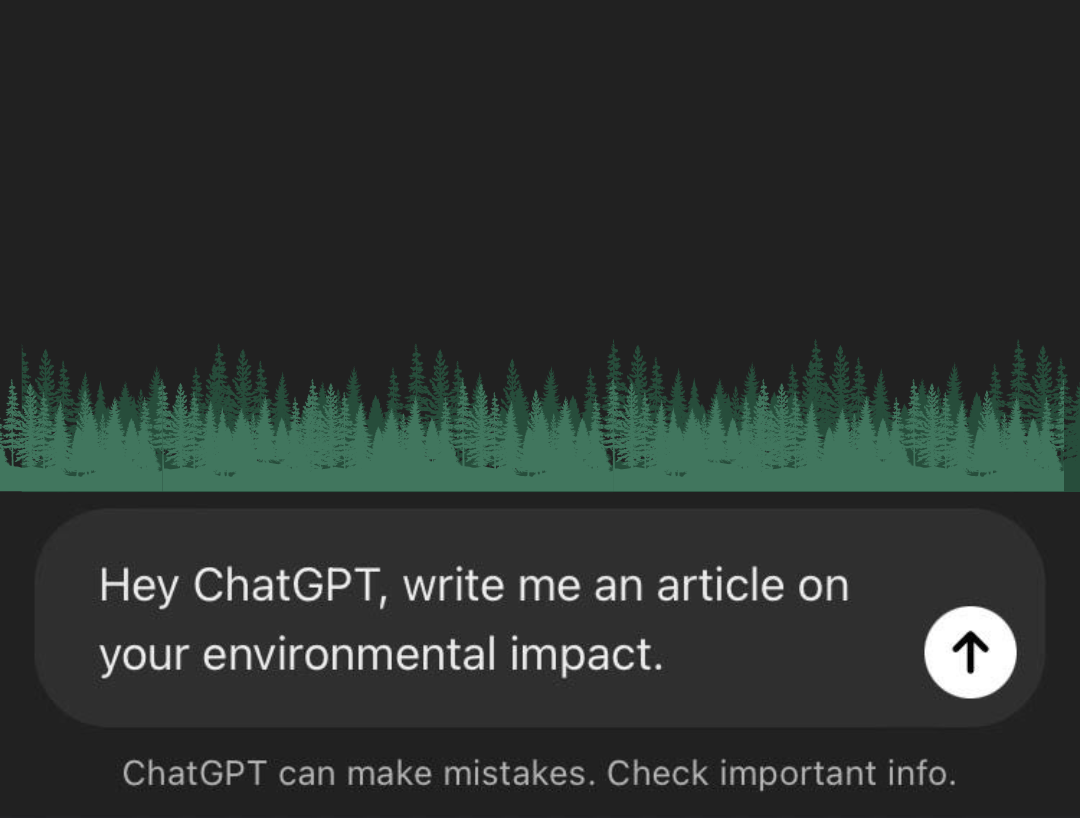




As artificial intelligence becomes increasingly popular, with millions of visits to popular generative AI apps and sites such as Gemini or ChatGPT, concerns and stories of students using AI to cheat on assignments and submit AI-generated essays have become increasingly prominent.
Princeton University recently changed its honor code in response to AI. Previously, the university operated with a unique honor code requiring students to write a statement affirming their compliance with the rules, coupled with an expectation that students report violations of the code whenever they tested. Teachers could not proctor, and would leave the room once tests began. Now, in-class exams will be proctored at Princeton to alleviate pressure on students to report.
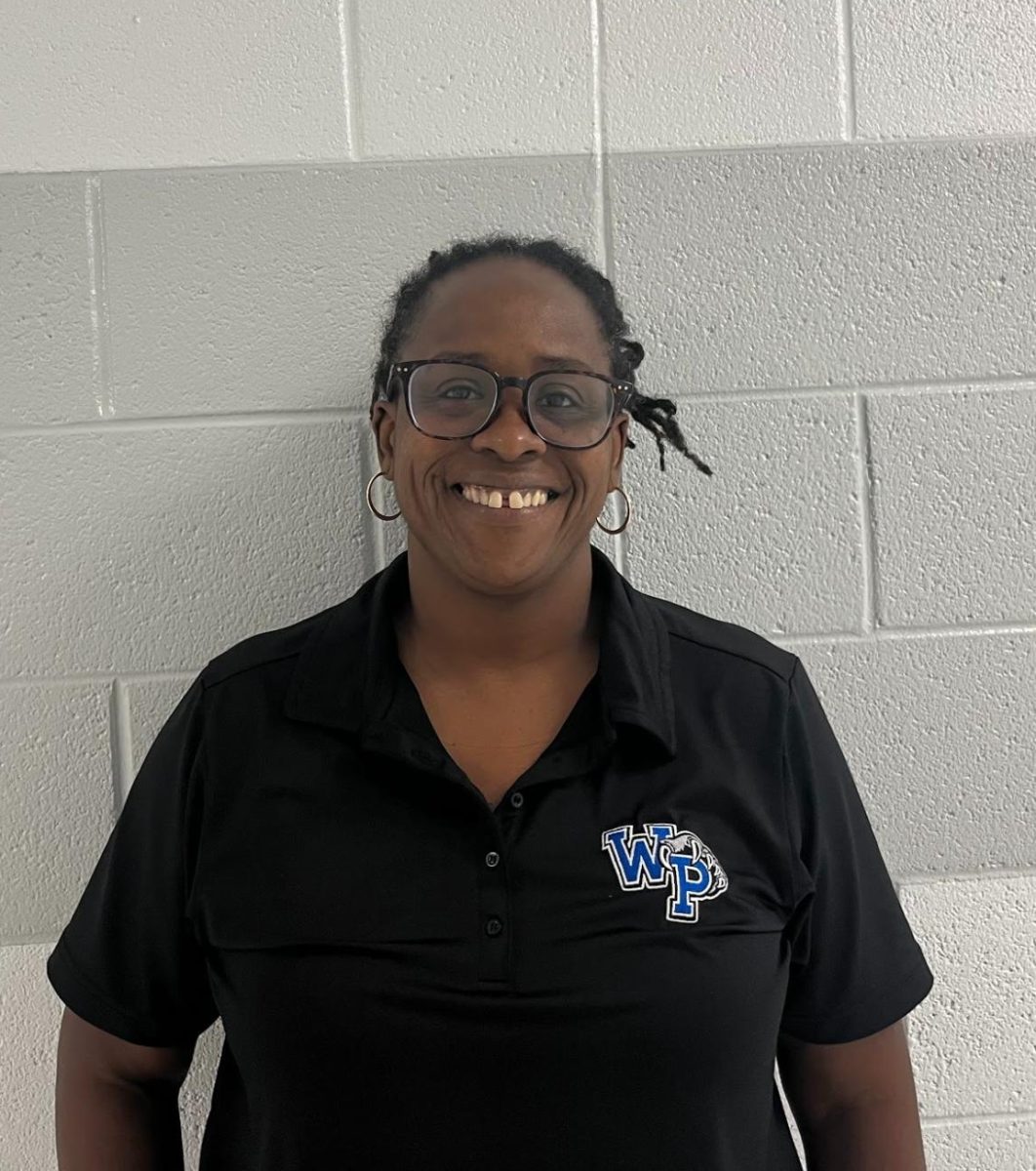
At West Potomac, when a teacher believes that a student has violated the honor code when completing work or answering assessments, the honor code states they report the violation through an honor code referral form. Ms. Jamie Carfang, Academy Administrator, receives these reports.
“If it’s the first time, we really try and use it as a learning experience to hopefully guide this student as to what happened and why it’s not correct … ,” Ms. Carfang explained.
When a student is reported for violating the honor code, their parents are notified by the reporting teacher. The teacher will speak to the student, and they will have an opportunity to redo the assignment involved in the offense for full credit. Sometimes, Ms. Carfang will also speak with the student about the incident.
If a student is reported multiple times, the consequences for the violation increase. At the second violation, a student might only be able to redo an assignment for half the credit. Then at the third violation, and successive ones, they will receive zeroes for their work.
Biology teacher Ms. Margaret Evans disagrees with punishing students by providing zeroes.
“I know that there’s many that think that [if] you cheated on it, it should receive a zero,” Ms. Evans said. “I think that there are some times where that feels just, but if the goal is to solicit what the child really knows, then does the zero really solicit what the child knows?”
Most students don’t accumulate multiple violations, and thus aren’t supposed to receive zeroes for their assignments.
“Honestly, I don’t have anyone with more than three [violations] this year,” Ms. Carfang said. “And I don’t even think [I did] last year.”
According to Ms. Carfang, many of the students she speaks with, having acquired their first violation, explain that their improper behavior was a result of ignorance, not intent.
“I see a lot of kids, when I have conversations with them, say ‘Well, I didn’t know I wasn’t allowed to do that.’ Now, whether or not they do or don’t, that’s a whole different story and I’m not in the classroom to know what was explained,” Ms. Carfang said.
The current honor code is available for viewing on the West Potomac website and provides multiple examples of behavior that constitutes cheating, plagiarism or fraud. But no students are given presentations of the information, or formal surveys to assess their understanding. To better ensure students understand the honor code, Ms. Carfang plans on encouraging the school administration to develop lessons and guidelines to explain to students the current honor code standards.
“I am going to work on the procedures over the summer and present to the admin team, because I do think we need to do some more instruction to students of what’s acceptable and what’s not,” Ms. Carfang said.
Students commonly demonstrate misunderstanding with the honor code as it pertains to the use of artificial intelligence. Ms. Carfang believes that addressing artificial intelligence in the classroom is one important step for resolving accidental violations.
Ms. Carfang explained, “Now, with AI just becoming so popular for everything in everyone’s life, I think there needs to be some instruction on how to use it properly. Because it can be a great tool, but also there are some times where teachers don’t want you using it.”
The Governance Committee of the school board has been drafting a policy to guide usage of AI for months, and is expected to bring it to the whole board for consideration before the next school year. Recent drafts of the policy include directions for FCPS leadership to design lessons for staff and students about using generative AI tools and how to develop “AI literacy.”
“My hope is also to next year get some advisory lessons where students can see exactly what it looks like to have your own thoughts, versus just copying what AI is telling you,” Ms. Carfang said, referring to West Po specifically.
Though Ms. Carfang tracks reports of honor code violations, students who have violated the honor code may not be submitted to her.
“Teachers always have the capacity to handle it in house,” Ms. Carfang pointed out. “So, I only know what teachers report to me.”
Teachers sometimes opt not to go through the reporting process because of time constraints, or particular case-by-case circumstances.
“Submitting it is a lot of documentation. The amount of time between the event and its resolution is too far apart,” Math teacher Mr. Minh Huynh explained. “It’s not the most expedient way to deal with it.”
When teachers don’t have compelling evidence to prove a student has cheated on an assignment, as is difficult with writing a teacher is suspicious as AI generated, they may also avoid submitting reports, expectant that it may lead nowhere.
Ms. Krista Sheetz, English teacher, explained, “I could only really report when I can absolutely prove it, which is a little hard sometimes … I would get a method of finding it [cheating] and then there’s a work around.”
For English teachers, requiring process documents like drafts, or checking the edit history on digital documents can provide a paper trail for teachers to reference and ensure cheating hasn’t occurred. In Math, Mr. Minh says there’s another way to recognize cheating.
“The students that rely on [cheating] have a certain lack of critical thinking,” Mr. Minh said. “They don’t analyze the answer and then determine: Have we even learned or discussed these things?”
When students complete math quizzes or tests and don’t include their work, or use strategies that weren’t taught in class, Mr. Minh finds that it suggests that a student may have used AI to answer the question.
According to Ms. Sheetz, Mr. Minh, Ms. Evans, and Ms. Carfang, cheating hasn’t occurred with growing frequency. Continuous studies by Stanford researchers have validated this observation, finding that roughly 70% of students self-report engaging in at least one cheating behavior, which has remained consistent across several years.
The study also found that most students do not support using AI to complete the entirety of an assignment. A majority of students do, however, support using AI for beginning steps of an assignment, like brainstorming and research.
Teachers hear from students their perspectives on AI, and some find appreciation in students’ distrust of the technology.
“There’s this backlash now with students, which I kind of enjoy,” Ms. Sheetz said. “[There are] Students saying I would never use it, it’s slop, or just really looking down on the whole thing for many reasons.”
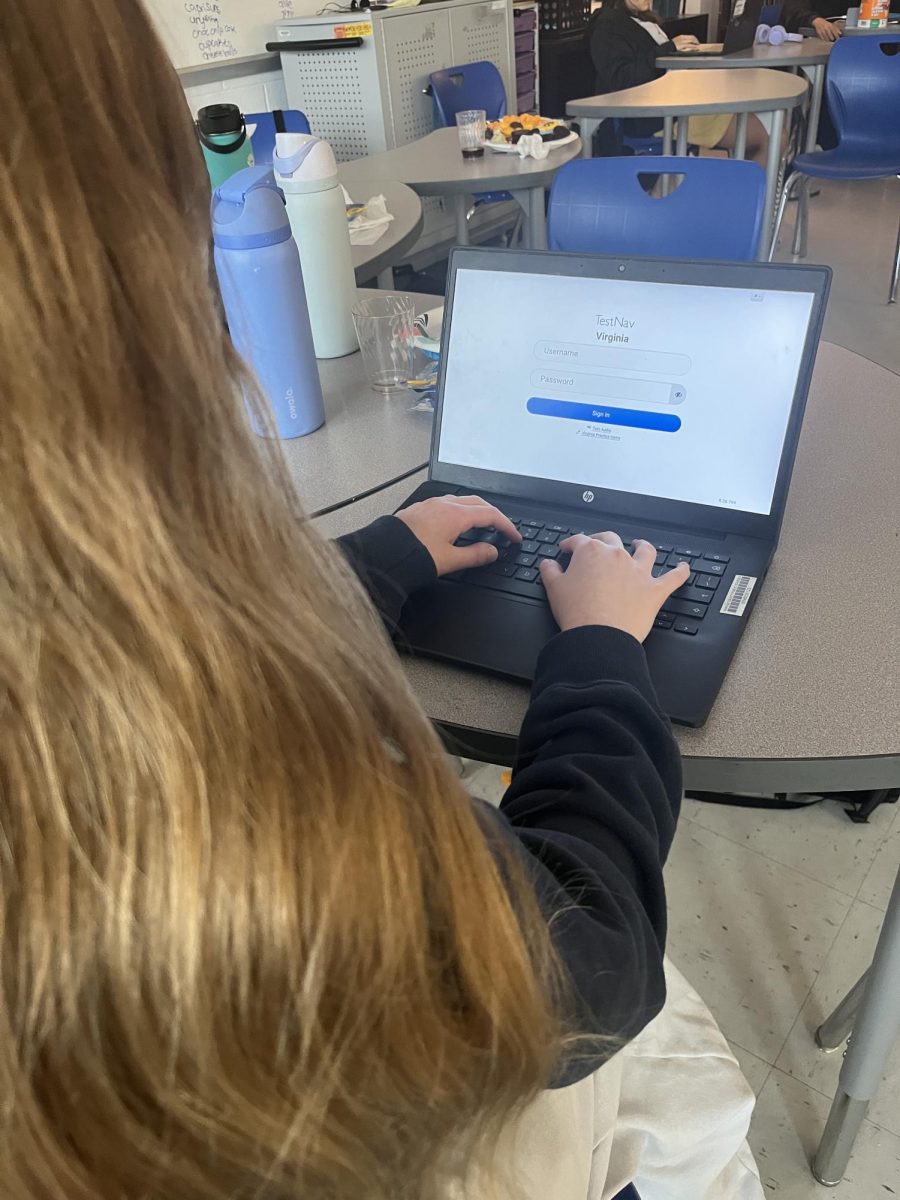
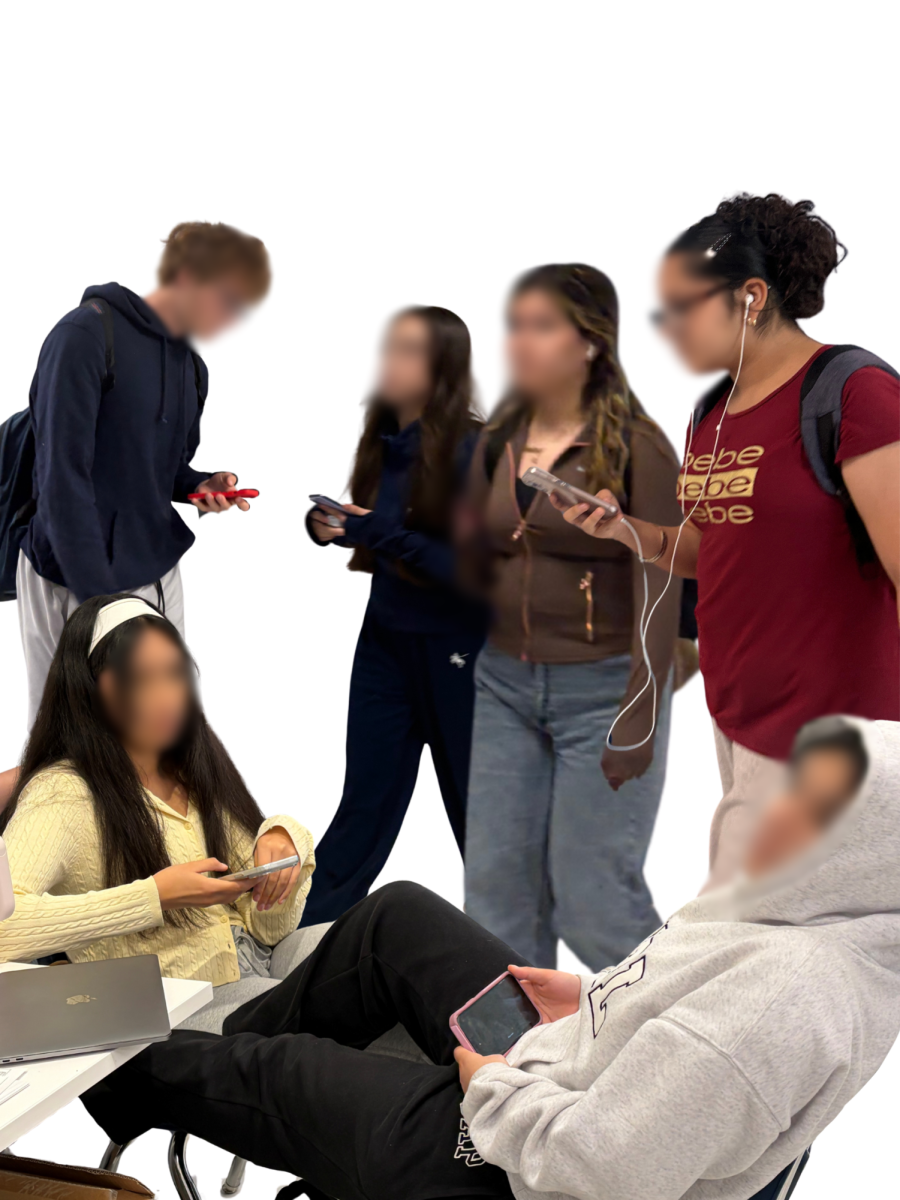
Ms. Evans had some issues with cheating this year. She heard that students were taking photos of assessments inputting questions into AI, but didn’t see this behavior herself in her class. Because students are restricted from using their computers during tests, she didn’t have many problems. One student, however, did use a personal device during an assessment, and she reported them.
Since submitting the report, she had yet to be notified of any consequences or lack thereof the student may have received.
“I think it’s important to keep the teacher in the loop, as far as what were the consequences,” Ms. Evans said. “Not that we need to know every detail of it, but just know that there was a consequence, because I think teachers begin to lose trust in the system when there is no transparency.” She added, “Sometimes it just seems like those things go into a void, and you just never hear anything back about it.”