
































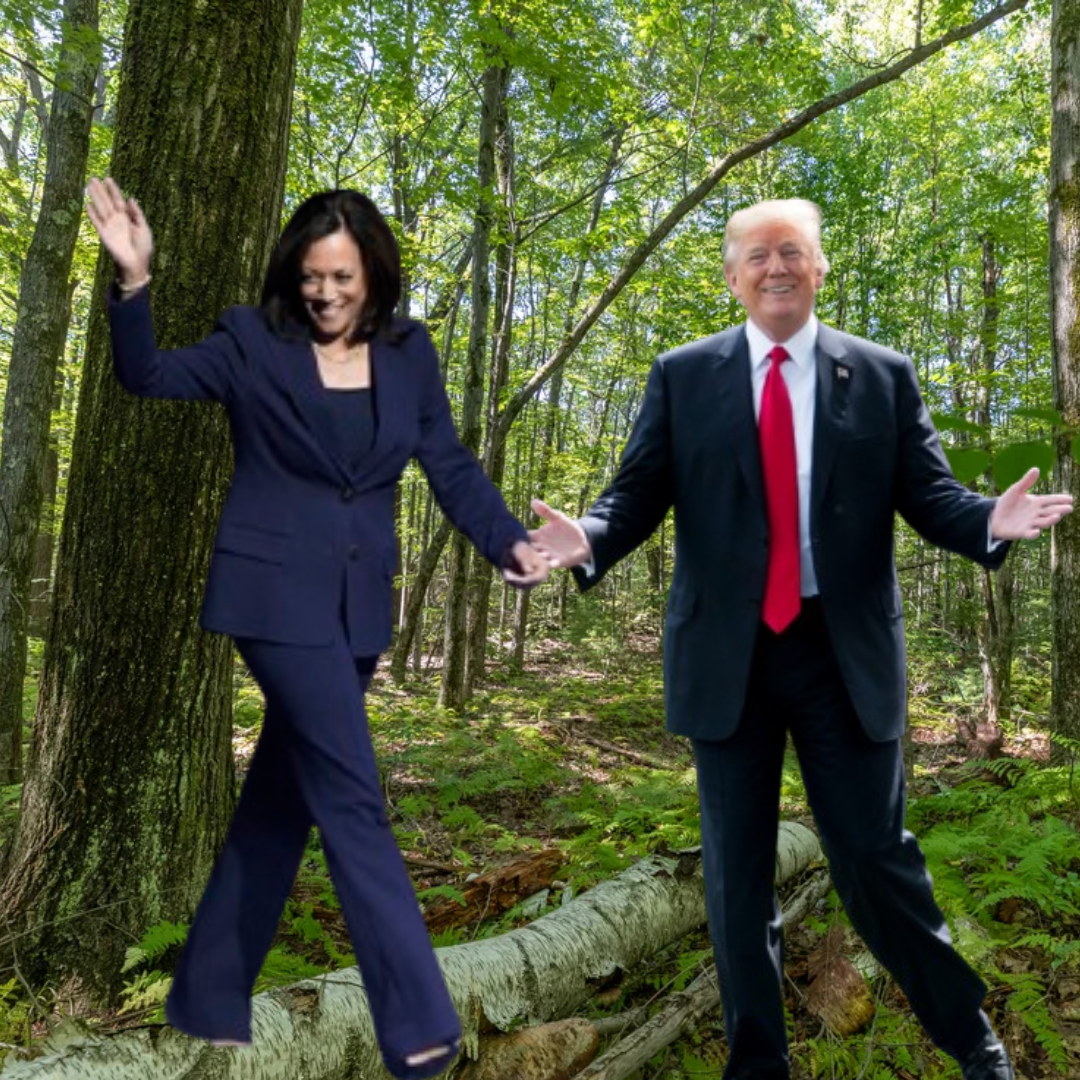



Gubernatorial candidates Abigail Spanberger, democrat, and Winsome Earle-Sears, republican, have both discussed education as important issues they wish to address as potential governors. While they agree that students need support, they diverge on how to provide that support.
Earle-Sears focuses on school choice as a means of addressing limitations for underserved students. Her campaign site states, “As governor, Winsome will empower parents to choose the best school for their children so every child gets a quality education.”
In January 2024, she wrote an op-ed in the Roanoke Star, expressing her support for SB533/HB1164. The bill created a financial program called Education Excellence for All, and directed the state treasury to implement and manage it. In this program, parents would be able to complete an application for state financial aid, which would be provided in the form of a disbursement to a savings account. Money from this account could only be used to pay for school materials and tuition for education outside of any Virginia public school, such as private schools or homeschooling resources. The bill, akin to some voucher programs in other states, did not make it through the state legislature.
“Despite what partisan politicians may want you to believe, we can continue to improve and support our public schools and teachers while also funding innovative programs with proven results. Just like we have with lab schools, charter schools, education savings accounts, and individualized education models,” Earle-Sears wrote.
Earle-Sears has not published policy plans or ideas to her campaign site, but has taken a firm stance publicly regarding transgender-inclusive school policies.
Earle-Sears’ campaign advertising has included her condemnation of such policies, many of which allow transgender students to use bathrooms and locker rooms corresponding to sex, and may have inclusion pathways in gendered sports as well. Two campaign ads, “Transform” and “They/Them” attack Spanberger’s prior support of transgender inclusions in these spaces. Earle-Sears also derided Spanberger’s vote in Congress for the Equality Act in an op-ed on the topic.
“Notwithstanding the bill’s name, there is nothing equal or normal about a law that makes girls afraid to change in their school locker rooms or threatens their safety every time they step onto the playing field,” Earle-Sears wrote.
Spanberger, conversely, has explicitly stated that she would not support “efforts to divert funding from public education to pay for voucher programs.” Voucher programs commonly use government funds to provide families with certificates to use for private school, but are criticized as redirecting money that could benefit public school districts to individuals.
The stated values of Spanberger’s education policy do not promote school choice or parents’ rights as Earle-Sears’ does. Instead, she proposes that schools require funding they currently don’t receive and seeks to utilize the Virginia Department of Education to assist school districts and students in need.
“Her administration will appoint public school champions who will demand that the Virginia Department of Education (VDOE) is effective and efficient, with a clear mission of giving every child the opportunity to reach their full potential,” Spanberger’s campaign site states.
Several issues are emphasized in Spanberger’s Strengthening Virginia Schools plan, which can be found on her campaign site under Values. Through the VDOE, she plans to “prioritize effective implementation of the Virginia Literacy Act,” investigate programs to improve student skills for careers, create teacher recruitment strategies, and establish tablet and laptop best practice guidance.
To support students with disabilities, Spanberger will “Direct VDOE to provide recommendations for mitigating impacts to special education programs and resources as a result of potential funding shortfalls and staffing disruptions in the U.S. Department of Education.”
Spanberger wrote an op-ed in August with Virginia Senator L. Louise Lucas regarding education policy. In it, she criticized funding cuts administered by the White House.
“As local schools and parents grapple with the consequences of these reckless threats, Virginia’s Governor and Lieutenant Governor are silent,” Spanberger wrote. “No plans. No press conferences. No reassurances for Virginia parents.”