





























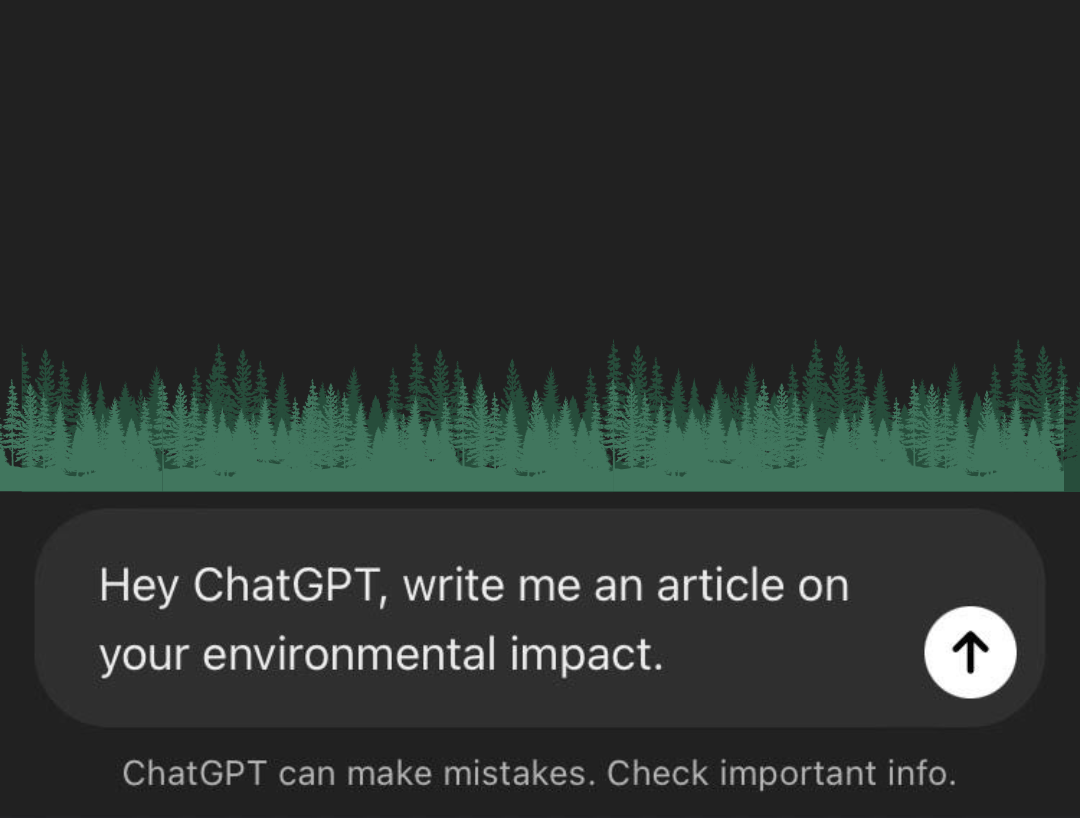




On Nov. 19, Superintendent Michelle Reid sent an email to teachers and staff stating that FCPS is partnering with Open Artificial Intelligence (AI). FCPS was one of the eight school districts first in line to participate in the pilot program of ChatGPT for Teachers.
“We are, in essence, trailblazing a path for hundreds of other school divisions and communities to follow,” she said. “That is why I am pleased to share that we are working together with Open AI.”
Currently, all FCPS teachers and staff have access to a free version of ChatGPT including an additional version with more features and an extra layer of security. Teachers and staff will be able to brainstorm, create lesson plans, translate and even customize GPT’s, tailored versions of ChatGPT that users can build, with this new tool.
“At the heart of it, the best use of AI is that it creates more opportunities for us to make human connections,” Summer Johnson, FCPS technology innovation partner, said. “The biggest way it [ChatGPT for Teachers] benefits classrooms is through its ability to personalize lessons, and being able to create an environment that speaks to everyone’s learning levels and style.”
“FCPS is investing a lot of time in learning how to use AI tools, like ChatGPT, to improve instruction. It’s really from the standpoint of we must teach our teachers and staff how to use these tools to make teaching better,” Melinda Hedenberg, West Po based technology specialist, said. “ChatGPT for Teachers can make workflow more efficient, help with administrative tasks, brainstorm ideas and even create lessons or assignments tailored directly to students.”
Though AI can provide more learning opportunities to students, FCPS has 199 schools and centers with almost 30,000 staff members. Since it is such an expansive district, it’s not guaranteed that all teachers and staff will eagerly engage with this new technology.
“I’ve been in the educational technology world for the past ten years in the district and there are a lot of people who have not yet embraced using technology, especially AI,” Johnson said. “To combat this challenge, district leaders will encourage teachers and staff to experiment with the tool, while also sharing stories of implementation that have been effective.”
FCPS has plans to train teachers and staff on how to effectively understand and use AI through webinars, training and providing resources on ChatGPT for Teachers.
“It’s my job as an education technology coach to help West Po teachers. I’m doing Tech Talk Tuesdays where teachers are invited to come to an open Q&A if they are interested in learning more about how to use AI,” Hedenberg said. “I also have a bi-weekly newsletter I email to staff with usually one section that is just about AI tools, and a monthly tabloid in the teacher bathrooms with AI tips and tricks.”
As AI is currently developing in the education environment, the tool’s features are evolving based on teacher feedback. As of Jan. 16, there have been 5,058 users and 83,523 messages sent on ChatGPT for Teachers. However, many West Po teachers are still not familiar with this new AI resource.
“I didn’t know that FCPS provided ChatGPT for Teachers, but I personally wouldn’t use it because I like to make sure my materials are tailored to what we are doing in my class,” Erin Brunk, English 9 and 10 teacher, said. “I also don’t expect my students to hold themselves to a standard that I also wouldn’t hold myself, if I were to use it.”
“I don’t plan on using it [ChatGPT for Teachers] because I have yet to see its usefulness. FCPS made this big announcement but it came with no demonstration of its value,” Colin O’Grady, English department chair, said. “My concern is that it [ChatGPT for Teachers] is going to further the distance between students and teachers. I’m concerned that it creates feedback that is not specific to what my students need to hear and that it will break the personal relationships I’ve made with my students.”
Meanwhile, other teachers have familiarized themselves with this new AI tool to help reduce their workload and efficiently complete tasks.
“I mainly use it for repetitive things and to simplify my time, so turning a slide presentation into guided notes or using it as a search engine for history primary sources to make stimulus based questions,” Daniel Baldwin, history and government teacher, said. “It’s good that teachers are being unleashed to experiment with it [ChatGPT for Teachers] to eventually prepare for a classroom where everyone’s using it because that is the direction the world is heading.”
Access to this AI model will be free of cost for FCPS until June 2027. Once this free trial is over, FCPS will determine if they will continue funding ChatGPT for Teachers based on feedback and budgeting.
“I would iterate that students don’t have access yet, which I think is one of those misconceptions,” Johnson said. “Our hope is that once we have more teacher AI literacy, that it will make it more comfortable for us to trickle it [AI technology] down towards students.”