


































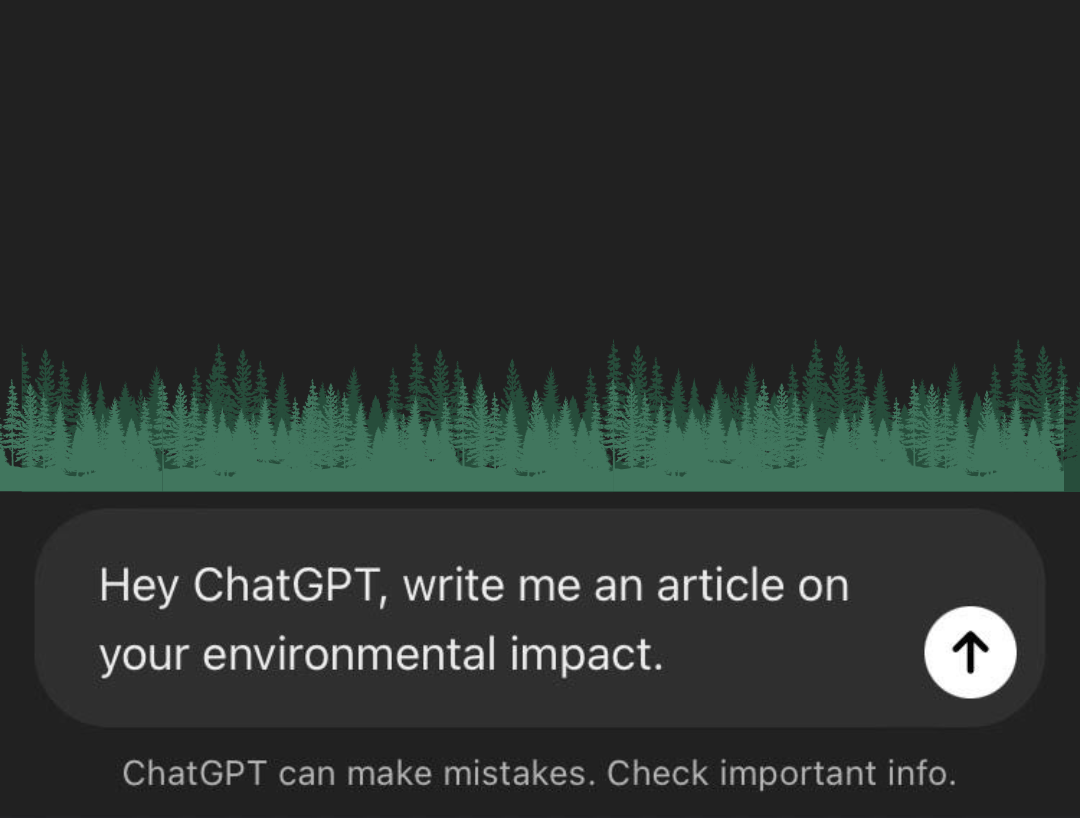





Since ChatGPT went public in 2022, school systems have scrambled to understand a rapidly evolving technology. Now Fairfax County Public Schools (FCPS), the ninth largest school district in the country, is drafting a policy to manage artificial intelligence in the classroom. FCPS leadership recently held a roundtable for student journalists about Education in the Age of AI.
As of now, FCPS teachers are able to use ChatGPT for Teachers free of cost as part of the partnership with OpenAI. However, in June 2027, FCPS will have to decide whether or not to pay OpenAI and continue using the service. Staff also have access to Google Gemini for Education and Notebook LM, in addition to supplemental tools within programs, like AI-powered functions within Canva and Google Workspace.
Most of generative AI’s applications lie in creating teaching materials, such as lesson plans, rubrics, readings, assignments, or quizzes. Depending on the prompt, an AI can create variations of inputted material or new work according to provided descriptors.
“It’s like having the best personal assistant ever,” Ms. Hedenberg described. “It never gets tired. It never runs out of ideas, and a human does.”
Ms. Margaret Evans, a Biology teacher, finds it most helpful for brainstorming. She thinks it has uses for adapting lessons, or coming up with new ones. But Ms. Evans has seen flaws in AI.
“I have found that in what I see AI puts together sometimes there’s a lot of misinformation content-wise,” Ms. Evans explained. “And if you’re not an expert in the content, then those mistakes can slip by, and then you’re feeding inaccurate information to your students because you are seeing the AI as the expert.”
She cautioned that teachers should review the content AI produces, and be conscious of whether or not the materials it generates will actually be helpful for their students.
“While it’s there to pull ideas and pull information for you, it should never supersede the teacher’s final decisions as far as what is in the best service of their students,” Ms. Evans said.
Ms. Krista Sheetz, an English teacher, has not used AI much. Ms. Sheetz described using it to generate variations of a grammar quiz, providing it an example quiz. But Ms. Sheetz remains skeptical of AI’s usefulness.
“I think part of teaching is getting to know your students and how they write. I don’t know how I would do that if I was using AI,” she said.
Mr. Minh Huynh, a Math teacher, hasn’t used AI at all. For him, AI can’t grade to the standards he wants.
“Most digital softwares, it’s binary. It’s either right or it’s wrong. But students deserve more credit than that,” he said.
But grading, brainstorming and reviewing student work aren’t the only teacher tasks that AI can complete. Upper-level administrators in the district see significant value in data analysis to support the school system.
“If you think about Fairfax beyond the classroom, we are a $4 billion dollar company,” Gautam Sethi, Chief Information Technology Officer, noted. “We have 40,000 employees, and AI has promises in providing efficiencies at various layers of an organization.”